


Solar Panel Leasing with Singapore's Leading Solar Company
Lease Solar Panels Now
Singapore, being one of the world’s solar-dense cities, has rapidly increased solar capacity over half a decade. Today, they have a goal: by 2030, energy generated from “solar” systems can supply up to 350,000 families and reduce carbon footprint. BUILT. Solar Panel Specialist is one of the like-minded institutions whose goal is to create green and clean living a reality.
BUILT. Solar Panel Specialist leases unused rooftops of buildings, establishments, residential apartments, or kiosks and installs leased solar panels that help generate and harness energy from sunlight. This results in a great alternative source of energy needs.
BUILT. Solar Panel Specialist Roof Leasing’s Agenda
The agenda of the solar leasing companies has the benefit of the business, homeowners, or landowners. By leasing solar panels, owners can earn money passively. The other good thing about it is that it can contribute to the increase in solar capacities.
Once everything’s good to go, the leasing company will pay a rental fee annually or do monthly payment options in exchange for the use of the rooftop space.
Property owners are also not required to pay upfront cost, maintenance cost, or installation fees since they only lend their unused space—what an excellent way to earn and help save Mother Earth! You can purchase solar panels and hold their solar system.
It can decrease electricity consumption, therefore decreasing the electricity bill. Other benefits of solar power are increased protection from UV rays, which will make the property cooler and increase its market home value. Businesses will incur utility bill savings.
Why you should lease your roof?
Generate Passive Revenue
One of the main benefits of having your rooftops leased is passive income. It helps use untapped and unutilised spaces and convert them into a steady source of income, requiring no physical effort.
Positive Impact on the Environment
The solar energy generated from the sunlight is a renewable form of energy. Singapore mainly relies on natural gas as its primary energy source. Non-renewable energy products are harmful to the environment. Opting for renewable energy will save our planet.
Reduced Electricity Consumption
Another good thing about solar rooftop leasing? You can save on your electricity bills by leasing or buying solar panels or having a power purchase agreement with the leasing company. Talk about being able to earn and save money at the same time.

What’s the Process Like?
Assessment
The potential location will need to be assessed first by several government agencies such as the Urban Redevelopment Authority, and the Building, and Construction Authority. In some cases, the Singapore Civil Defence Force and the Civil Aviation Authority of Singapore are consulted prior to the proposed site’s approval.
Installation
Once everything’s approved and agreed upon, the installation step involves tasking registered architects and engineers to do facility planning, designing, and installation within an agreed-upon timeframe. Electricians are also needed during this step and in the succeeding management and maintenance of the solar power system.
Monitoring
Periodic monitoring is performed for quality control and to check for the performance and condition of the solar systems. This is done throughout the lifespan of the solar panels, which is said to last up to 25 years.
Maintenance
The good thing about solar panels is that they are very much low maintenance, but it is of utmost importance to periodically check on them and lightly clean them (remove debris, etc.). Repairs are done promptly as needed.
How does Solar Panel Roof Leasing Work?
Lease Agreement
It works by having the property owner and the solar array owner enter a site leasing agreement wherein the property owner allows using unused property space for solar panel installation in Singapore.
Property Lessor
In this agreement, the property owner does not own the solar panel systems installed on their property. This is a type of Solar services model wherein the property owner is free from all the hassles involved in installing solar panels like capital, upfront costs or outright purchases.
Benefits
Benefits include passive income generation and access to low-cost electricity. As for the solar services providers, they receive financial benefits plus tax credits, making it entirely a good deal on both sides.
The property owner and solar array owner negotiate the amount of the rental fee to be paid in exchange for the long-term lease of the property. It is important to note that the property owner has no extra obligation as the solar systems, their monitoring and maintenance, are entirely under the jurisdiction of the solar array owner/ leasing company.
It is said to be similar to the Solar Power Purchase Agreement (SPPA). In SPPA, there is a solar lease agreement between the property owner and the solar array owner/ developer. The property owner purchases solar electricity harnessed from the solar panel system installed on their property.

Solar Panel Roof Leasing Eligibility
The space should be free from obstruction, especially in the long term.
This is self-explanatory since the solar panels need to absorb sunlight, and obstructions can produce decreased electricity.
The roof must be well built.
It is essential to undergo roof checking and repair first before installation. This is done to ensure that the roof can support the solar panel systems.
The lease must be long term
Leases usually last from 10 years to 20 years. It stays that long so that the financial benefits can be realised. Having your property leased involves long-term commitment.
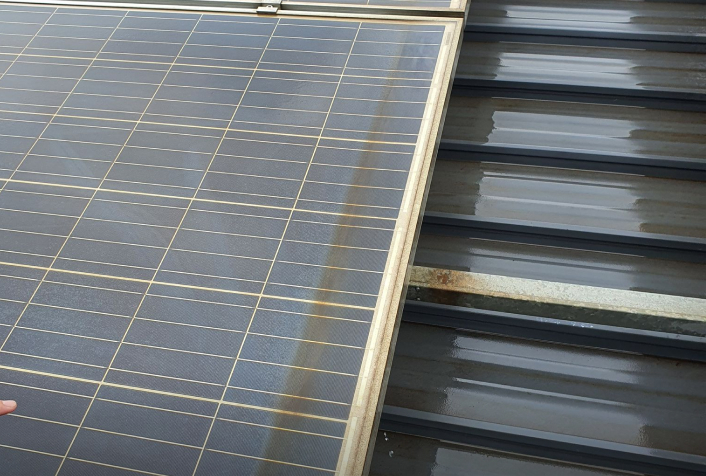
- During the installation process, the roof will be prepared to accommodate the solar panel systems. All potential barriers are removed so that the installation process would proceed well.
An ideal rooftop for lease is large, flat, and free from barriers or obstructions.
Yes, usually, it lasts for 10-20 years, making it a long-term commitment.
The amount you can save will depend on your energy consumption, but you can enjoy up to a 50% energy savings. How much you earn will depend on the agreement between the property owner and the service provider.
Contacts
180B Bencoolen Street, #11-05,
The Bencoolen,
Singapore 189648
And we will contact you as soon as possible
